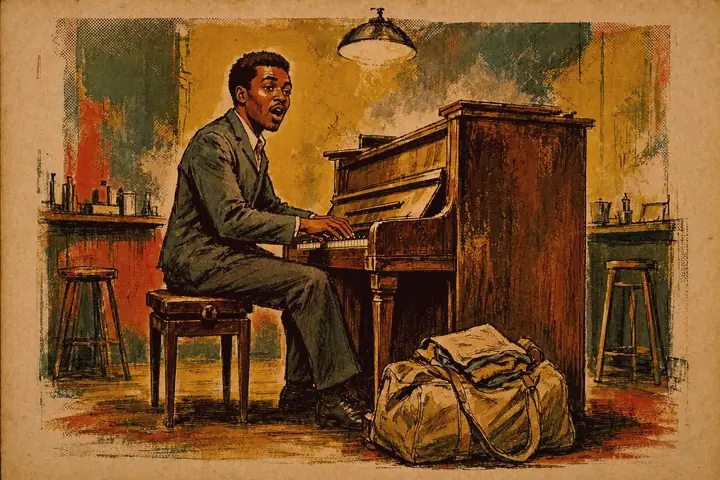
Tim Armstrong — Frontman of punk band Rancid · around 1989–1990 · East Bay, California, USA
Drawn scene — not a portrait
Tim Armstrong, who went by the name Lint in his early days, was the guitarist and singer of the East Bay punk band Operation Ivy. The band's final release came in 1988 and it dissolved the following year. According to an East Bay Express profile, it broke up because its members were uncomfortable with growing popularity, and not because of fighting among themselves.
What followed for Armstrong was a hard period. The article says he fell into a heavily publicised bout of depression, and that dyslexia, poor grades and low self-esteem had left him with no sense of direction without his music. It adds that alcoholism and heroin addiction took control of him. He wound up living on the streets. The profile does not name the city, give his age, or say how long this lasted, though it places the time after the band's end, so around 1989 onward.
The turning point came through a friend. Matt Freeman, Operation Ivy's bassist, was unwilling to watch his friend kill himself. He took Armstrong in and got him sober enough to stay in a halfway house. According to the article, Armstrong eventually cleaned up, aided by the formation of the band Rancid.
Rancid grew out of the friendship between the two. The band became one of the best-known American punk groups of the 1990s, and Armstrong fronted it. The profile does not quote Armstrong directly about the time he spent on the streets.
Retold from the sources listed. The picture is an AI-generated drawing, not a portrait of the person. The person in the story or their family may ask for a correction or removal.
من القاع للقمة · الموسيقى
من الشارع إلى قيادة فرقة رانسيد
تيم أرمسترونغ — المغني الرئيسي لفرقة البانك رانسيد · منطقة إيست باي، كاليفورنيا، الولايات المتحدة
كان تيم أرمسترونغ، الذي عُرف في بداياته باسم «لينت»، عازف الغيتار ومغني فرقة البانك «أوبريشن آيفي» في منطقة الإيست بي. وصدر آخر إصدارات الفرقة عام 1988 وتفككت في العام التالي. وبحسب بورتريه نشرته إيست باي إكسبرس، تفككت الفرقة لأن أعضاءها شعروا بعدم الارتياح من تزايد شعبيتها، وليس بسبب خلافات بينهم.
وكان ما تلا ذلك فترة صعبة لأرمسترونغ. يقول المقال إنه وقع في نوبة اكتئاب حظيت بتغطية واسعة، وإن عسر القراءة وضعف الدرجات وتدني تقدير الذات تركته بلا اتجاه من دون موسيقاه. ويضيف أن إدمان الكحول والهيروين سيطر عليه. وانتهى به الأمر يعيش في الشوارع. ولا يذكر البورتريه المدينة ولا عمره ولا كم استمر ذلك، لكنه يضع الفترة بعد انتهاء الفرقة، أي منذ نحو عام 1989.
وجاءت نقطة التحول عبر صديق. فقد رفض مات فريمان، عازف الباس في أوبريشن آيفي، أن يشاهد صديقه يقتل نفسه. فاستقبل أرمسترونغ وساعده حتى صار قادرا على الإقامة في بيت وسيط للتعافي. وبحسب المقال تعافى أرمسترونغ في النهاية، بمساعدة تشكيل فرقة رانسيد.
ونشأت رانسيد من الصداقة بين الاثنين. وأصبحت الفرقة من أشهر فرق البانك الأمريكية في التسعينيات، وكان أرمسترونغ مغنيها الرئيسي. ولا ينقل البورتريه عن أرمسترونغ كلاما مباشرا عن الفترة التي أمضاها في الشوارع.
أُعيدت كتابة القصة من المصادر المذكورة أعلاه. الصورة رسم تعبيري مولّد، وليست صورة للشخص. لصاحب القصة أو أسرته حق طلب التصحيح أو الحذف.