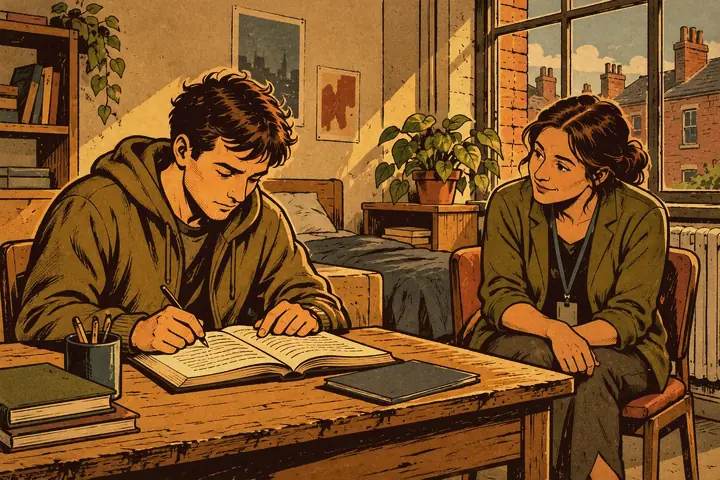
Sindhutai Sapkal — Padma Shri-winning carer of over 1,500 orphans · late 1960s–1970s · Maharashtra, India
Drawn scene — not a portrait
Sindhutai Sapkal was born into a family of cattle herders in the Wardha district of Maharashtra. Her father wanted her to study, but poverty and an early marriage ended her schooling after the fourth grade. At 12 she was married to a man about twenty years her senior.
Around the age of 20, when she was nine months pregnant, her husband, Sreehari Sapkal, sent her out to a cattle shed. According to Onmanorama, this followed her opposition to corruption by local landlords and forest officials. She gave birth to a daughter there, alone, cutting the umbilical cord with a stone. The villagers of Pimpri-Mogha would not take her in, and her own mother shut the door on her.
With her newborn she spent nights at a cemetery and begged for food. She begged on trains and made rotis from discarded grain, cooking them on leftover embers. The article says she twice attempted to end her life, at Malkapur railway station and at a cliff near Amravati, and that on both occasions a meal or a conversation with someone turned her back.
She began sharing what food she had with hungry children on the streets, and people started calling her Thai (sister) and Mai (mother). She placed her daughter, then five, with a children's trust in Pune, and adopted a boy named Deepak whom she found by railway tracks. After about fifteen years of work with tribal communities near Amravati, she moved to Pune with Deepak and sixteen adopted children and founded Mamata Balasadan, her first children's home.
By 2021 she had about 1,500 adopted children and ran six homes. Many of them had married and some had become doctors, engineers and lawyers. She received more than 750 awards, including the Padma Shri. In 2013, when the Maharashtra government honoured her in her old village, her husband asked her forgiveness; she took him in as her eldest son and cared for him until he died in 2018.
Sources
Onmanorama — «Mother of orphans: Padma Shri winner Sinduthai who once spent nights at cemetery with her newborn»
Retold from the sources listed. The picture is an AI-generated drawing, not a portrait of the person. The person in the story or their family may ask for a correction or removal.
من القاع للقمة · أخرى
ليال في مقبرة ثم أمٌّ لآلاف الأطفال
سيندوتاي سابكال — راعية أكثر من 1500 يتيم وحائزة وسام بادما شري · ماهاراشترا، الهند
ولدت سينديوتاي سابكال في أسرة من رعاة الماشية في منطقة واردها بولاية ماهاراشترا. كان أبوها يريد لها أن تتعلم، لكن الفقر والزواج المبكر أنهيا دراستها بعد الصف الرابع. وفي الثانية عشرة زُوّجت من رجل يكبرها بنحو عشرين عاما.
وفي نحو العشرين من عمرها، وكانت في شهرها التاسع من الحمل، أخرجها زوجها سريهاري سابكال إلى حظيرة للماشية. ووفق موقع «أونمانوراما» جاء ذلك بعد معارضتها فساد ملاك الأراضي وموظفي الغابات في المنطقة. وهناك ولدت ابنتها وحدها وقطعت الحبل السري بحجر. ورفض أهل قرية بيمبري موغا استقبالها، وأغلقت أمها نفسها الباب في وجهها.
قضت لياليها مع رضيعتها في مقبرة، وكانت تتسول الطعام. تسولت في القطارات، وصنعت خبز الروتي من حبوب مرمية وخبزته على جمر متبقٍ. ويذكر المقال أنها حاولت إنهاء حياتها مرتين، في محطة قطار مالكابور وعند جرف قرب أمرافاتي، وأن وجبة طعام أو حديثا مع أحدهم ثناها عن ذلك في المرتين.
بدأت تتقاسم ما معها من طعام مع أطفال جائعين في الشوارع، وصار الناس ينادونها «تاي» أي الأخت و«ماي» أي الأم. وأودعت ابنتها، وكانت في الخامسة، لدى مؤسسة خيرية للأطفال في بونا، وتبنت صبيا اسمه ديباك وجدته قرب سكة القطار. وبعد نحو خمس عشرة سنة من العمل مع مجتمعات السكان الأصليين قرب أمرافاتي، انتقلت إلى بونا مع ديباك وستة عشر طفلا متبنى، وأسست «ماماتا بالاسادان»، وهي أول دار للأطفال أقامتها.
وبحلول عام 2021 كان لها نحو 1500 ابن وابنة بالتبني، وكانت تدير ست دور. وتزوج كثير منهم، وصار بعضهم أطباء ومهندسين ومحامين. ونالت أكثر من 750 جائزة، منها وسام بادما شري. وفي عام 2013، حين كرمتها حكومة ماهاراشترا في قريتها القديمة، طلب زوجها صفحها، فاستقبلته ابنا أكبر لها واعتنت به حتى وفاته عام 2018.
أُعيدت كتابة القصة من المصادر المذكورة أعلاه. الصورة رسم تعبيري مولّد، وليست صورة للشخص. لصاحب القصة أو أسرته حق طلب التصحيح أو الحذف.