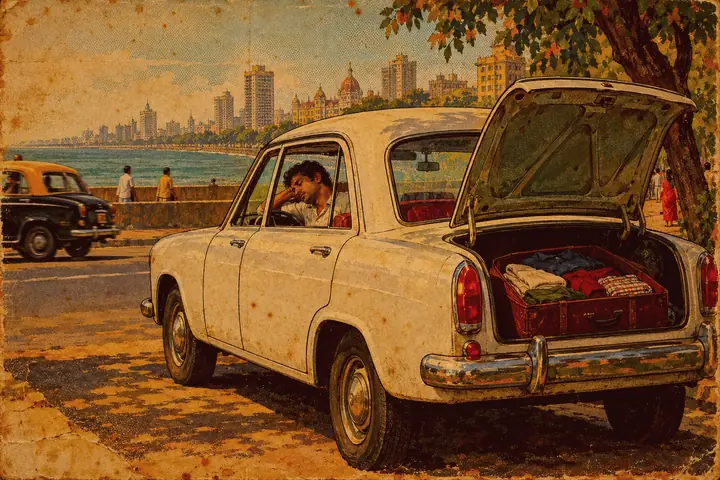
Ronit Roy — One of India's highest-paid TV actors · late 1990s · Mumbai, India
Drawn scene — not a portrait
Ronit Roy is an Indian actor who became one of the highest-paid names in Indian television. His path there was not straight. By the late 1990s his film career had stalled. DNA India reports that he attributed his decline to heavy drinking and poor financial decisions.
As a result he could no longer pay the rent and left his home. He later said that for the longest time he did not have a house and lived in a car. He kept his clothes in one large suitcase in the boot, and before shoots he used hotels in Juhu, in Mumbai, and public lavatories to wash and freshen up. The article does not say exactly how long this lasted.
The turning point came in 2002, when the producer Ekta Kapoor cast him in Kasautii Zindagii Kay. The serial became a major success and made him a star. In the same year he took over the role of Mihir in Kyunki Saas Bhi Kabhi Bahu Thi, replacing the actor Amar Upadhyay.
In the mid-2000s, according to a Times of India report cited by DNA, he was earning about 50,000 rupees per episode. He later had further success in the courtroom drama Adaalat. In 2010 the film Udaan brought him back to cinema.
The article cites media reports that put his current fees at around 1.25 lakh rupees per television episode and up to one crore rupees per film. The story it tells is of a performer who lost his footing, spent a long period without a home, and rebuilt his career through television.
Sources
DNA India — «India's highest-paid TV actor lost money due to alcohol, went homeless, lived in car, used public washroom, now earns...»
Retold from the sources listed. The picture is an AI-generated drawing, not a portrait of the person. The person in the story or their family may ask for a correction or removal.
من القاع للقمة · السينما والتلفزيون
عاش في سيارته ثم تربع على عرش التلفزيون الهندي
رونيت روي — من أعلى ممثلي التلفزيون أجرا في الهند · مومباي، الهند
رونيت روي ممثل هندي أصبح من أعلى الأسماء أجرا في التلفزيون الهندي. ولم يكن طريقه مستقيما. ففي أواخر التسعينيات كانت مسيرته السينمائية قد توقفت. وتفيد «دي إن إيه إنديا» بأنه عزا تراجعه إلى الإفراط في الشرب وقرارات مالية سيئة.
ونتيجة لذلك لم يعد قادرا على دفع الإيجار فترك بيته. وقال لاحقا إنه لفترة طويلة لم يكن لديه بيت وكان يعيش في سيارة. وكان يحتفظ بملابسه في حقيبة كبيرة في صندوق السيارة، وقبل التصوير كان يستعين بفنادق في جوهو في مومباي وبمراحيض عامة ليغتسل وينتعش. ولا يذكر المقال بالضبط كم دام ذلك.
وجاءت نقطة التحول عام 2002 حين أسندت المنتجة إيكتا كابور إليه دورا في مسلسل «كاسوتي زندغي كي». وحقق المسلسل نجاحا كبيرا وجعله نجما. وفي العام نفسه تسلم دور ميهير في «كيونكي ساس بهي كبهي بهو تهي» خلفا للممثل أمار أوباديايي.
وفي منتصف العقد الأول من القرن، بحسب تقرير في «تايمز أوف إنديا» استشهد به الموقع، كان يتقاضى نحو 50 ألف روبية للحلقة. وحقق لاحقا نجاحا آخر في الدراما القضائية «عدالت». وفي عام 2010 أعاده فيلم «أوداان» إلى السينما.
ويستشهد المقال بتقارير إعلامية تضع أجره الحالي عند نحو 1.25 لاخ روبية للحلقة التلفزيونية وحتى كرور روبية للفيلم. والقصة التي يرويها هي قصة فنان فقد توازنه، وقضى مدة طويلة بلا بيت، وأعاد بناء مسيرته عبر التلفزيون.
أُعيدت كتابة القصة من المصادر المذكورة أعلاه. الصورة رسم تعبيري مولّد، وليست صورة للشخص. لصاحب القصة أو أسرته حق طلب التصحيح أو الحذف.