The Flying Sikh Arrived in Delhi Homeless and Alone
Milkha Singh — Legendary Indian sprinter, 'The Flying Sikh' · 1947 · Delhi, India
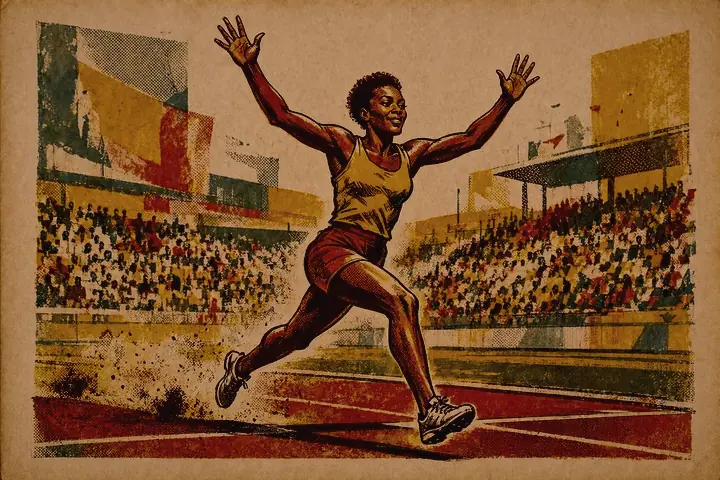
Drawn scene — not a portrait
Milkha Singh was a boy of about 12 when the Partition of India in 1947 upended his life. His family lived in Lyallpur, in what became western Pakistan, and in the riots that followed he lost most of his relatives. Gulf News recounts that his father urged him to flee with the words 'Run, Milkha, run.'
He escaped by hiding on a crowded refugee train bound for Delhi. Looking back, he told the paper that he arrived in the city homeless, penniless and with no one to call his own. He then lived in a government refugee camp, one of the many people who had been displaced by the division of the country.
At 16, on the advice of a relative, he joined the Indian Army. A compulsory cross-country run for recruits revealed his ability: he came sixth, and senior officers noticed him and began training him as a runner.
His results came steadily. In 1955 he was second in the 200 and 400 metres at the Services Athletic Meet, and in 1956 he won the 400 metres at the National Games in Patiala, though he went out in the first round at the Melbourne Olympics. In 1958 he took the 200 and 400 metres at the Asian Games in Tokyo and the 400 metres at the Commonwealth Games in Cardiff, which was India's first athletics gold there.
His best-known race came at the 1960 Rome Olympics, where he finished fourth in the 400 metres, missing the bronze medal by a fraction of a second. Later that year he beat Pakistan's Abdul Khaliq in Lahore, and the nickname 'the Flying Sikh' followed. The boy who reached Delhi with nothing became one of India's most celebrated sprinters.
Sources
Gulf News — «Milkha Singh's phenomenal flight to fame»
Retold from the sources listed. The picture is an AI-generated drawing, not a portrait of the person. The person in the story or their family may ask for a correction or removal.
كان ميلكا سينغ صبيا في نحو الثانية عشرة حين قلب تقسيم الهند عام 1947 حياته رأسا على عقب. كانت أسرته تعيش في لايلبور، في المنطقة التي أصبحت غرب باكستان، وفقد في أعمال العنف التي تلت ذلك معظم أقاربه. وتروي «غلف نيوز» أن والده حثه على الفرار بعبارة «اركض يا ميلكا، اركض».
نجا باختبائه في قطار مكتظ باللاجئين متجه إلى دلهي. وقال للصحيفة في ما بعد إنه وصل إلى المدينة بلا مأوى وبلا مال وبلا أحد يعتمد عليه. ثم عاش في مخيم حكومي للاجئين، مثل كثيرين غيره ممن شردتهم تجزئة البلاد.
وفي السادسة عشرة، وبنصيحة من أحد أقاربه، التحق بالجيش الهندي. وكشف سباق الجري الإلزامي للمجندين عن موهبته، إذ حل سادسا، فلفت أنظار كبار الضباط الذين بدؤوا يدربونه عداء.
وتوالت نتائجه بثبات. ففي عام 1955 جاء ثانيا في 200 متر و400 متر في بطولة الخدمات لألعاب القوى، وفي 1956 فاز بسباق 400 متر في الألعاب الوطنية في باتيالا، رغم خروجه من الدور الأول في أولمبياد ملبورن. وفي 1958 فاز بسباقي 200 و400 متر في دورة الألعاب الآسيوية في طوكيو، وبسباق 400 متر في ألعاب الكومنولث في كارديف، وكان ذلك أول ذهب للهند في ألعاب القوى هناك.
وجاء سباقه الأشهر في أولمبياد روما 1960، حين حل رابعا في 400 متر وفاتته الميدالية البرونزية بجزء ضئيل من الثانية. وفي وقت لاحق من العام نفسه تغلب على الباكستاني عبد الخالق في لاهور، ومن هنا جاء لقب «السيخي الطائر». وهكذا صار الصبي الذي وصل إلى دلهي بلا شيء من أشهر العدائين في تاريخ الهند.
أُعيدت كتابة القصة من المصادر المذكورة أعلاه. الصورة رسم تعبيري مولّد، وليست صورة للشخص. لصاحب القصة أو أسرته حق طلب التصحيح أو الحذف.