David Petite — Inventor with about 50 patents · after his first company failed · USA
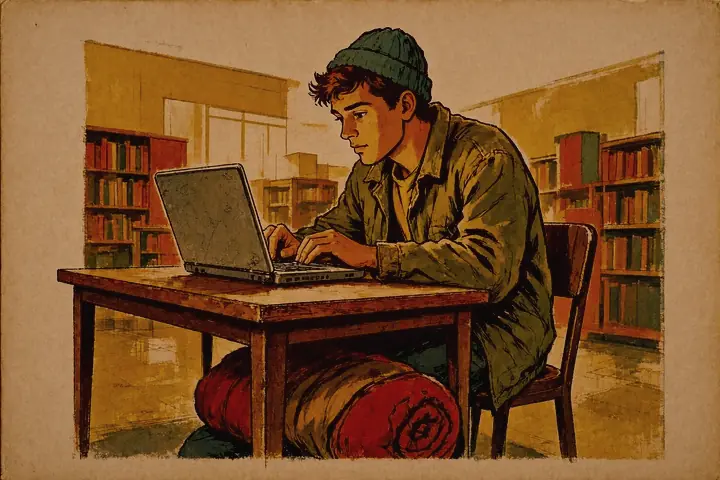
Drawn scene — not a portrait
David Petite grew up in a hardscrabble household, which taught him self-sufficiency early. A member of the Chippewa tribe, he is the son of a tribal chief in Wisconsin, and he was raised in Atlanta. His first invention, as a child, was a leaf blower he made from a hair dryer, which he later sold to Wal-Mart.
His first research and development company failed because it lacked resources. CNN Money describes him losing the fight to keep a roof over his head and ending up living in his car, a point the article calls rock bottom. It gives no dates or ages for that period.
He committed to bettering his life, and an angel investor, seeing someone with the will to succeed, financed him. He went on to develop communications technology for assisted living facilities and for meter manufacturers. CNN reports that his innovations earned him 50 patents worldwide, while another profile counts more than 35 U.S. patents in energy conservation and communications. He is best known for work on wireless mesh technology, which has led to the Smart Grid.
He has said that he learned to see failures as great lessons. His advice is to look in the mirror and say you are going to make a difference for the people around you, and you will be rewarded.
Petite now helps others find their way. He founded the Native American Inventors Association and the Independent Native American Intellectual Property Council, a nonprofit that helps Native American inventors through the patent process and into commercialisation. He also visits schools, usually in low-income areas of the Southwest, to inspire younger students.
Retold from the sources listed. The picture is an AI-generated drawing, not a portrait of the person. The person in the story or their family may ask for a correction or removal.
من القاع للقمة · العلم والتعليم
مخترع أعاد البناء انطلاقا من سيارته
ديفيد بيتيت — مخترع يملك نحو خمسين براءة اختراع · الولايات المتحدة
نشأ ديفيد بيتيت في أسرة شديدة العوز علّمته الاعتماد على النفس مبكرا. وهو من قبيلة تشيبيوا، وابن زعيم قبلي في ولاية ويسكونسن، وتربى في أتلانتا. وكان أول اختراع له في طفولته منفاخ أوراق صنعه من مجفف شعر، وباعه لاحقا لسلسلة وول مارت.
فشلت شركته الأولى للبحث والتطوير لافتقارها إلى الموارد. وتصف «سي إن إن موني» كيف خسر معركة الحفاظ على مأوى فانتهى به الأمر إلى العيش في سيارته، وهي لحظة تسميها المقالة القاع. ولا تذكر تواريخ أو أعمارا لتلك الفترة.
التزم بتحسين حياته، ورأى فيه مستثمر ملاك إنسانا عنده إرادة النجاح فموّله. وطوّر بعد ذلك تقنيات اتصالات لمرافق رعاية المسنين ولمصنّعي العدادات. وتذكر «سي إن إن» أن ابتكاراته أكسبته 50 براءة اختراع حول العالم، فيما يحصي تعريف آخر به أكثر من 35 براءة اختراع أمريكية في حفظ الطاقة والاتصالات. وهو معروف بالأساس بعمله على تقنية الشبكة اللاسلكية المتشابكة التي قادت إلى الشبكة الذكية.
وقال إنه تعلم أن ينظر إلى الإخفاقات بوصفها دروسا عظيمة. ونصيحته أن تنظر في المرآة وتقول إنك ستحدث فرقا لمن حولك فتكافأ على ذلك.
ويساعد بيتيت اليوم غيره على إيجاد طريقهم. فقد أسس رابطة المخترعين من السكان الأصليين الأمريكيين والمجلس المستقل للملكية الفكرية للسكان الأصليين، وهو منظمة غير ربحية تساعد المخترعين من السكان الأصليين على اجتياز إجراءات براءات الاختراع حتى التسويق. كما يزور المدارس، وغالبا في مناطق منخفضة الدخل في الجنوب الغربي، لإلهام التلاميذ الأصغر.
أُعيدت كتابة القصة من المصادر المذكورة أعلاه. الصورة رسم تعبيري مولّد، وليست صورة للشخص. لصاحب القصة أو أسرته حق طلب التصحيح أو الحذف.