Charlie Chaplin — One of cinema's most celebrated filmmakers · 1890s · London, United Kingdom
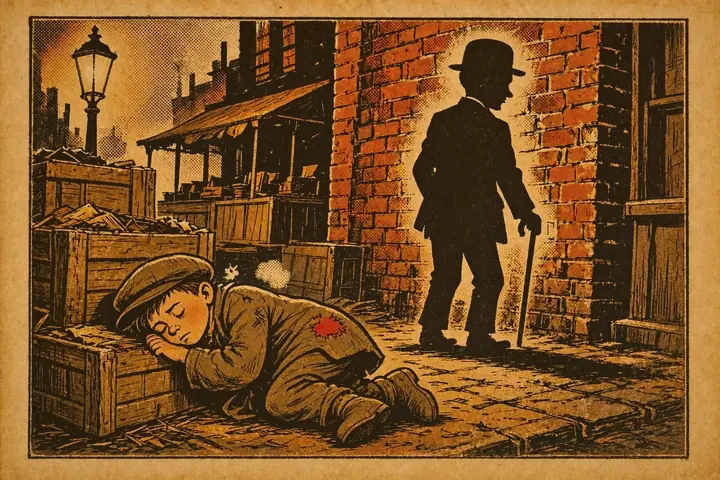
Drawn scene — not a portrait
Charlie Chaplin was born in London in the late 1880s into a family that was soon in difficulty. His parents separated when he was three. His mother, who had a mental illness, struggled to support her children, and over roughly a decade Chaplin moved in and out of the Lambeth Workhouse, a London institution for destitute people. The Smithsonian Magazine article does not say how many times he entered.
He later wrote about the first arrival, in the 1890s, when he and his brother Sydney were separated from their mother. He remembered a forlorn bewilderment. On a visiting day some days later, he recalled the shock of seeing her come into the visiting room dressed in workhouse clothes. In his words, in one week she had aged and grown thin, but her face lit up when she saw the boys.
In 1904, when Chaplin was 14, he brought his mother to the workhouse. A letter from the family says she had an extreme mental disorder, and she was sent to an asylum. She spent most of her remaining years in psychiatric care.
The article connects these years to the character Chaplin later created, the Little Tramp, a sympathetic outsider who is never crushed by life's blows. He became one of the most celebrated filmmakers in cinema history.
The piece itself is about a campaign. The Cinema Museum, which covers cinema history from the 1890s to today, occupies the former Lambeth Workhouse. The building belongs to the South London and Maudsley NHS Trust, which planned to sell it when the museum's lease ended in March 2018. A petition with more than 22,800 signatures asked the Trust to secure the museum's future, and five members of the Chaplin family signed an open letter calling the museum the nearest thing Britain has to a Chaplin Museum.
Sources
Smithsonian Magazine — «Campaign hopes to save the workhouse where Charlie Chaplin spent an unhappy childhood»
Retold from the sources listed. The picture is an AI-generated drawing, not a portrait of the person. The person in the story or their family may ask for a correction or removal.
من القاع للقمة · السينما والتلفزيون
من ملجأ لامبيث للفقراء إلى أسطورة السينما الصامتة
تشارلي تشابلن — من أشهر صناع الأفلام في تاريخ السينما · لندن، المملكة المتحدة
وُلد تشارلي تشابلن في لندن في أواخر ثمانينيات القرن التاسع عشر لأسرة وقعت سريعا في الضيق. انفصل والداه حين كان في الثالثة. وكانت والدته، التي كانت تعاني مرضا نفسيا، تكافح لإعالة أبنائها، وعلى مدى نحو عقد دخل تشابلن ملجأ لامبث للفقراء وخرج منه مرات، وهو مؤسسة في لندن تؤوي المعدمين. ولا تذكر مقالة مجلة سميثسونيان كم مرة دخله.
وكتب لاحقا عن أول وصول إليه، في تسعينيات القرن التاسع عشر، حين فُصل هو وأخوه سيدني عن والدتهما. وتذكر حيرة حزينة. وفي يوم زيارة بعد أيام تذكر صدمة رؤيتها تدخل غرفة الزيارة بثياب الملجأ. وبحسب كلامه، شاخت في أسبوع واحد وهزلت، لكن وجهها أشرق حين رأت الولدين.
وفي عام 1904، حين كان تشابلن في الرابعة عشرة، أخذ والدته إلى الملجأ. وتقول رسالة من الأسرة إنها كانت تعاني اضطرابا نفسيا شديدا، فأُرسلت إلى مصحة. وقضت معظم ما بقي من سنواتها في الرعاية النفسية.
وتربط المقالة هذه السنوات بالشخصية التي ابتكرها تشابلن لاحقا، شارلو المتشرد، الغريب المتعاطف الذي لا تحطمه ضربات الحياة. وأصبح أحد أشهر صناع السينما في التاريخ.
أما المقالة نفسها فتدور حول حملة. فمتحف السينما، الذي يغطي تاريخ السينما من تسعينيات القرن التاسع عشر إلى اليوم، يشغل مبنى ملجأ لامبث القديم. والمبنى مملوك لهيئة ساوث لندن آند مودزلي الصحية، التي كانت تعتزم بيعه عند انتهاء عقد إيجار المتحف في مارس 2018. وطالبت عريضة وقّعها أكثر من 22800 شخص الهيئة بتأمين مستقبل المتحف، ووقّع خمسة من أفراد عائلة تشابلن رسالة مفتوحة وصفت المتحف بأنه أقرب ما لدى بريطانيا إلى متحف لتشابلن.
أُعيدت كتابة القصة من المصادر المذكورة أعلاه. الصورة رسم تعبيري مولّد، وليست صورة للشخص. لصاحب القصة أو أسرته حق طلب التصحيح أو الحذف.