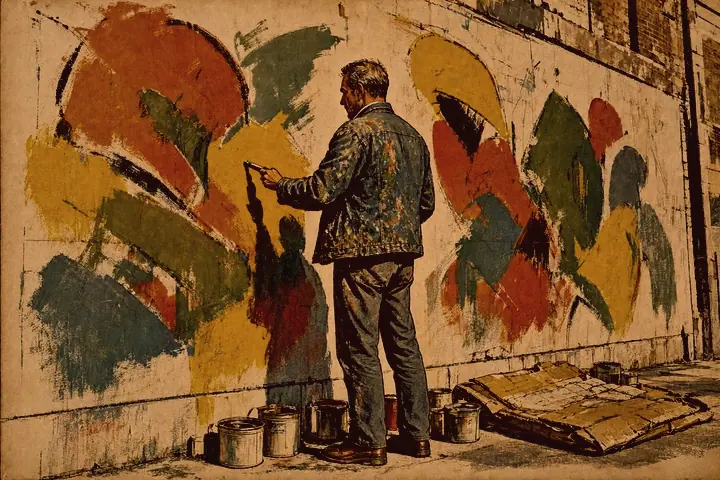
Antonio Ligabue — Celebrated Italian painter with a Rome exhibition · 1920s · Gualtieri, Italy
Drawn scene — not a portrait
Antonio Ligabue was born in Zurich on 18 December 1899 to Elisabetta Costa, an Italian migrant from the Belluno area; his father is not known. In 1900 he was placed with a Swiss couple, the Göbel-Hanselmanns, with whom he lived until 1919. He spoke only German and went to school near St. Gallen until the third grade. His mother married Bonfiglio Laccabue of Gualtieri in 1901, and the surname that Ligabue later adopted came from that name.
On 15 May 1919 Switzerland expelled him. He was taken to Como and then sent, escorted by carabinieri, to Gualtieri, in northern Italy, the home town of his stepfather, a place he did not know. He did not speak Italian and found it very hard to fit in. He lived alone in the countryside and got by on public assistance, occasional jobs, charity and some money from his adoptive mother. He tried to go back to Switzerland but was stopped at Lodi.
For long periods he lived in the woods along the River Po, where animals were his main company. It was there that he began to paint and to model small clay sculptures, which he would hand over in exchange for food or small favours. Most local people saw him as an eccentric outsider.
In the winter of 1928 and 1929 he met the critic and painter Renato Marino Mazzacurati, who had just moved to Gualtieri. Mazzacurati recognised his talent and later championed his work. During the Second World War Ligabue used his German to work as an interpreter.
From 1948 he showed his paintings in local exhibitions and won a few prizes, and with Mazzacurati's help his work reached larger venues. By the 1950s he was financially secure. His first exhibition in Rome opened at the Galleria La Barcaccia in February 1961. He kept painting until the end of his life and died in Gualtieri on 27 May 1965.
Retold from the sources listed. The picture is an AI-generated drawing, not a portrait of the person. The person in the story or their family may ask for a correction or removal.
من القاع للقمة · الفنون والأدب
الرسام الذي عاش في غابات نهر بو
أنطونيو ليغابوي — رسام إيطالي شهير عرضت أعماله في روما · غوالتيري، إيطاليا
ولد أنطونيو ليغابوي في زيورخ في 18 ديسمبر 1899 لإليزابيتا كوستا، وهي مهاجرة إيطالية من منطقة بيلونو، ولا يُعرف والده. وفي عام 1900 أُسند إلى رعاية زوجين سويسريين هما غوبل وهانسلمان، وعاش معهما حتى 1919. كان يتكلم الألمانية وحدها، وذهب إلى المدرسة قرب سان غالن حتى الصف الثالث. وتزوجت أمه عام 1901 من بونفيليو لاكابوي من غوالتييري، ومن هذا الاسم جاء اللقب الذي تبناه ليغابوي لاحقا.
وفي 15 مايو 1919 طردته سويسرا. فنُقل إلى كومو ثم أُرسل بمرافقة الدرك إلى غوالتييري في شمال إيطاليا، وهي بلدة زوج أمه ولم يكن يعرفها. ولم يكن يتكلم الإيطالية فوجد صعوبة بالغة في الاندماج. وعاش وحيدا في الريف، يعتمد على المساعدات العامة والأعمال المؤقتة والإحسان وبعض المال من أمه بالتبني. وحاول العودة إلى سويسرا لكنه أُوقف في لودي.
وعاش فترات طويلة في الغابات على ضفاف نهر البو، وكانت الحيوانات رفيقه الأول. وهناك بدأ يرسم ويشكل منحوتات صغيرة من الطين، يعطيها مقابل الطعام أو خدمات بسيطة. وكان معظم أهل المنطقة يرونه غريب الأطوار.
وفي شتاء 1928 و1929 التقى الناقد والرسام ريناتو ماريو مازاكوراتي، الذي كان قد انتقل لتوه إلى غوالتييري. وتبين مازاكوراتي موهبته ودافع عن أعماله لاحقا. وخلال الحرب العالمية الثانية عمل ليغابوي مترجما مستفيدا من إتقانه الألمانية.
ومنذ عام 1948 عرض لوحاته في معارض محلية ونال بعض الجوائز، ومع مساعدة مازاكوراتي وصلت أعماله إلى قاعات أكبر. وفي الخمسينيات صار مستقرا ماليا. وافتتح معرضه الأول في روما في قاعة لا باركاتشا في فبراير 1961. وواصل الرسم حتى آخر حياته، وتوفي في غوالتييري في 27 مايو 1965.
أُعيدت كتابة القصة من المصادر المذكورة أعلاه. الصورة رسم تعبيري مولّد، وليست صورة للشخص. لصاحب القصة أو أسرته حق طلب التصحيح أو الحذف.